
July's nature news roundup
Read about plans to 'resurrect' the Giant Moa, how an ancient (and strange-looking) spider is at risk and the current nature news in Britain.
Every month, I aim to collect and summarise nature news articles found in the nature sections of various online news sites. Take a look at the linked headlines to find out more :)
Here are seven interesting nature news posts from the month of July!
5th July
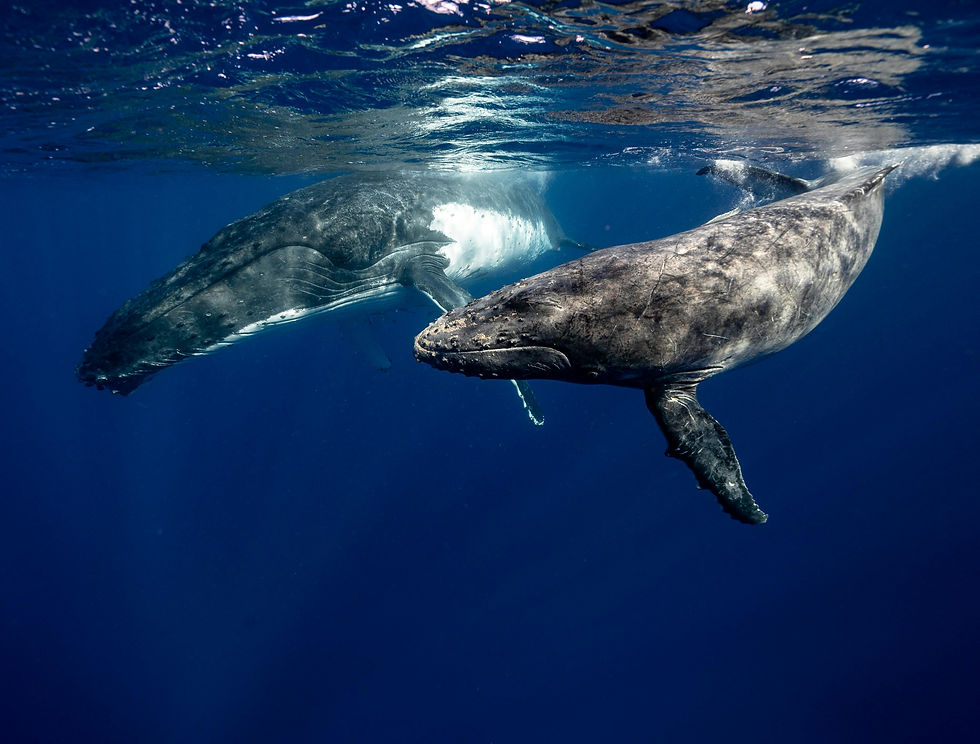
New research has found that zooplankton (a mixture of many microorganisms of different species and of many different sizes) have a huge role to play in limiting global warming. Zooplankton accounts for around 40% of the total mass of all marine life, and as such are a vital food source for thousands of larger species. Scientists have found that the zooplankton eat the phytoplankton (a mixture of, for example, microscopic plants, bacteria and algae) and store this as fat in their bodies, migrate to Antarctica and sink themselves deep into the ocean, where they trap carbon dioxide. They estimated that ocean zooplankton store the same amount of carbon as the annual emissions of 55 million petrol cars. Without zooplankton, the atmosphere would be much warmer, but scientists are researching the multitude of threats that zooplankton face (such as bottom trawling for krill) in an effort to help conserve these tiny planet-saving organisms.

6th July
In the UK, it is estimated that 97% of woodland does not have enough ancient or veteran trees to support the diversity of life in the area, and yet researchers have found that a greater density of these trees were associated with a higher number of butterfly species (species richness). The research funded by The Woodland Trust, and carried out by Oxford University and Butterfly Conservation, also found that supporting farmers to maintain trees and hedgerows in their farmland (which forms 70% of the UK land area), can help to increase butterfly populations by providing wildlife corridors.

12th July
Colossal Bioscience, a US start-up company, that has amassed significant controversy, has revealed plans to 'resurrect' the Giant Moa, alongside the previous plans to bring the woolly mammoth, dodo and Tasmanian Tiger back from the dead. Researchers and conservationists are extremely concerned, arguing that the concern for the loss of biodiversity across the world is being smothered by 'exciting' de-extinction. The species that the company aim to resurrect no longer have the habitat needed to support them, and niches are filled by existing species. Several studies, including one by Bennett et al. (2017) argue that the money spent on these plans would be better used to conserve the biodiversity that the planet is losing.

18th July
An incredible new initiative, 'Nature Towns and Cities', is a coalition between the National Lottery Heritage Fund, National Trust and Natural England. Over a period of 10 years, the aim is to support and fund 100 towns and cities to create and maintain more green spaces in their areas. Already, Birmingham has become the first Nature City, and Bournemouth, Christchurch and Poole have become the first Nature Towns. Birmingham has a progressive City of Nature plan already in place, started in 2022 and proposed until 2047, and boasts 600 green spaces. The funding provided by the initiative across all of the 100 areas will improve people's access to green spaces, which is known to improve mental health whilst also benefiting the environment. The initiative could completely transform the country as a haven for nature and relief from the pressure of urban spaces for both people and wildlife.

18th July
On Kangaroo Island in Australia, the Kangaroo Island assassin spider Zephyrarchaea austini, is at significant risk from human activities. The assassin spider lineage has existed for 150 million years, and was only described in 2010 by Dr Michael Rix and Mark Harvey. In the last few years, the area has been hit with extreme droughts and wildfires, reducing the spiders' population dramatically as they need moist leaf litter to survive. In 2024, only seven individuals were found across six locations in 20 sq km. Additionally, a plant root disease has spread across the tree canopy, reducing the available leaf litter. Captive breeding could be an option, but this carries risks to the spiders. Conservationists like Dr Rix, and biologist Dr Jess Marsh, continue their dedicated research and efforts to conserve the fascinating species.
(I would suggest watching the video on the article to see how these spiders move and hunt, as I couldn't work it's body shape out until I did!)

30th July
In March, four beavers were released in a National Trust reserve in Dorset, providing hope for conservationists of the eventual release of the species across the whole of Britain. However, not a single license has been granted by the government, despite 40 applications being submitted, 20 from The Wildlife Trust, some from the National Trust, and from farmers and other landowners. Frustration is rife within The Wildlife Trust, as some of the applications require upwards of 90,000 words and despite their expert knowledge, consideration and involvement of other stakeholders, their licenses have not been issued. Beavers are a native 'ecosystem engineer', changing their habitat in a way that brings fantastic benefits to other species by damming watercourses to create wetlands, coppicing trees and helping to store carbon in the environment.

31st July
A £1.4 million project is being led by the National Farmers' Union, to vaccinate badgers against tuberculosis and help to protect cattle. Within the last year, 20,000 cattle have been slaughtered after herds have become infected. Until now, the most widespread method to reduce transmission has been badger culling, and since 2013, about 250,000 badgers have been killed. The cull is extremely controversial, with many scientific studies suggesting that the effect on transmission is minimal, but disagreement from farmers who are understandably desperate to protect their cattle and their livelihoods. The three year study involves 70 farmers in Cornwall, supported by experts from ZSL, trapping, testing and then vaccinating the badgers. The study's ultimate aim is to see whether the vaccination has an impact on cattle TB infection rates, and the best methods to do this most effectively. The initiation of the study shows how wildlife experts and farmers can work together to both conserve wildlife and protect farming.

Stay tuned until the end of the month where the August roundup will arrive!

Comments